How to Build Your Confidence With 10 Effective Tips
Confidence is not just a personal trait; it’s a foundational pillar that significantly impacts success in both personal and professional realms. Many assume confidence is an inherent quality, but it’s actually a skill that can be cultivated through intentional practice and mindset changes. Understanding how to build your confidence can open doors to new opportunities, enhance relationships, and improve overall well-being. It is thus imperative to master how to build your confidence.
Learning how to build your confidence starts with self-awareness—recognizing your strengths and accepting your weaknesses. By setting realistic goals and engaging in positive self-talk, individuals can gradually reshape their perception of themselves. These small steps not only enhance self-esteem but also empower people to step out of their comfort zones and take on new challenges. Each achievement, no matter how minor, fuels an upward spiral of confidence, proving that with the right strategies, anyone can become more assured and influential in their life.
Mentioned below are the 10 effective tips to help you build your confidence.
Tip 1: Understand Your Strengths and Weaknesses
Gaining a deep understanding of your strengths and weaknesses is crucial for building self-confidence. It allows you to leverage what you excel at and manage areas where you may need improvement. By conducting a self-assessment, you can create a clear picture of your capabilities and limitations, which is essential for personal growth and self-acceptance. Acknowledging your strengths boosts your self-esteem, while understanding your weaknesses prevents them from undermining your confidence.
To begin this self-assessment, list down your recent successes and the skills that contributed to those achievements. This exercise not only highlights your strengths but also reinforces your sense of accomplishment. Conversely, note the instances where you felt challenged or inadequate. Identifying these situations can pinpoint areas for improvement and development, making them less daunting and more manageable.
Finally, set specific, realistic goals to enhance your skills in both areas. For strengths, find ways to further hone and utilize them, especially in challenging scenarios. For weaknesses, consider seeking training or mentorship to build competence and confidence. This balanced approach ensures continuous personal development and helps maintain a positive outlook on your abilities, ultimately boosting your overall confidence.
Tip 2: Setting Realistic Goals
Setting realistic goals is a fundamental step in building confidence. By defining achievable objectives, you establish clear milestones that when accomplished, reinforce your belief in your abilities. It’s important to ensure these goals are not only attainable but also measurable and time-bound, which allows you to track progress and maintain motivation. This process transforms overwhelming aspirations into manageable tasks, making success more accessible and boosting your confidence with each small victory.
To effectively set these goals, use the SMART criteria—Specific, Measurable, Achievable, Relevant, and Time-bound. Start by identifying a specific area you want to improve or a skill you wish to acquire. Break this into smaller, quantifiable tasks with deadlines to keep yourself accountable. This method not only clarifies what success looks like but also provides a structured timeline that guides your efforts and keeps you focused on incremental progress.
Celebrating each goal achieved is crucial for sustaining motivation and building confidence. Recognizing your successes, no matter how small, can significantly enhance your self-esteem. This positive reinforcement makes challenges seem less intimidating and fosters a mindset geared toward continuous improvement. Over time, this cycle of setting, achieving, and celebrating goals cultivates a robust confidence that permeates all areas of your life, empowering you to tackle even bigger challenges.
Tip 3: Positive Self-talk
Positive self-talk is a powerful tool for building confidence, allowing individuals to shift away from a critical inner voice and foster a supportive one instead. This practice involves actively replacing negative thoughts with positive affirmations and realistic encouragement. By recognising destructive patterns and consciously choosing to focus on constructive and affirming messages, you reinforce your capabilities and worth, which boosts self-esteem and diminishes self-doubt.
Implementing positive self-talk starts with awareness. Begin by monitoring your thoughts throughout the day to identify any negative or unhelpful patterns. When you catch yourself engaging in negative self-talk, pause and reframe those thoughts more positively. For example, change “I can’t do this” to “I can try this in a different way.” This shift not only alters your internal dialogue but also changes your perception of your abilities and challenges.
Moreover, it’s beneficial to cultivate a habit of gratitude and positive reflection at the end of each day. Reflect on what went well, acknowledge your efforts, and affirm your progress, regardless of the outcome. This nightly practice helps solidify the gains from positive self-talk and prepares your mind to continue this pattern. Over time, this will significantly enhance your self-confidence and encourage a more optimistic outlook on life.

Tip 4: Visualise Success
Visualization is a potent technique in building confidence, involving the mental rehearsal of successful outcomes. By vividly imagining achieving your goals, you prime your brain to act in ways that align with your visualizations. This process not only enhances your mental preparedness for real-life scenarios but also boosts your belief in your ability to succeed, thereby increasing your overall confidence.
To practice visualization, find a quiet place to sit comfortably and close your eyes. Picture yourself in a scenario where you are successfully completing a task or achieving a goal. Focus on the details—envision the environment, the actions you are taking, the sounds, and even the emotions you feel. The more vivid the visualization, the more effective it will be in fostering a confident mindset.
Regular visualization strengthens the neural pathways associated with successful outcomes, making you more likely to act confidently in reality. Integrating this practice into your daily routine, perhaps in the mornings or before significant events, can transform your approach to challenges. Over time, as these visualizations lead to real-world successes, your self-assurance will grow, further reinforcing the cycle of confidence.
Tip 5: Embrace Failure as a Learning Opportunity
Embracing failure as a learning opportunity is essential for building resilience and confidence. Viewing setbacks not as roadblocks but as integral parts of the learning process can transform your approach to challenges. This perspective encourages a growth mindset, where failure is not a reflection of your abilities but an invitation to evolve and improve. Such an outlook reduces the fear of failure, boosting your willingness to take risks and try new things.
To effectively learn from failures, it’s crucial to analyze them objectively. After a setback, take time to reflect on what went wrong and why. Identify specific areas for improvement and develop a plan to address these issues in future endeavors. This approach not only helps in overcoming similar challenges in the future but also instills a sense of control and purpose, enhancing your confidence.
Encouraging a culture that celebrates the learning aspects of failure can also foster confidence. Share your experiences with peers or mentors and listen to theirs. This exchange can normalize the experience of failing and highlight the lessons learned, reinforcing that failure is a universal part of achieving success. Over time, this will build a more resilient and confident approach to facing life’s challenges.
Tip 6: Focus on Body Language
Body language plays a crucial role in building and projecting confidence. Maintaining good posture, making eye contact, and using purposeful gestures can significantly influence how others perceive you and how you feel about yourself. When you adopt a posture that exudes confidence, it not only improves others’ perceptions of you but also enhances your self-assurance. Studies suggest that physical poses can affect testosterone and cortisol levels in the brain, boosting confidence and reducing stress.
To improve your body language, start by becoming more mindful of your posture throughout the day. Whether you’re sitting at a desk or walking, strive to keep your back straight, shoulders back, and head held high. Practice makes perfect, and over time, these poses will become natural. Additionally, during conversations, maintain eye contact to convey confidence and attentiveness, further establishing your presence and engagement.
Engaging in exercises that enhance body awareness can also help in improving your body language. Activities like yoga, dance, or martial arts teach you how to control your movements and develop a better posture. Regular practice of such activities not only makes you more aware of your body in space but also improves your overall demeanor. This newfound confidence in your physical presence can then permeate into other aspects of your life, making you feel more assertive and capable.
Tip 7: Prepare Thoroughly
Thorough preparation is a cornerstone of confidence. When you’re well-prepared, whether for a presentation, meeting, or any task, you not only understand your material inside and out, but you also anticipate potential questions and challenges. This level of readiness boosts your confidence significantly because it reduces the unknowns, allowing you to handle situations more adeptly. Moreover, the process of preparing itself reinforces your knowledge and skills, further solidifying your self-assurance.
Effective preparation involves more than just understanding your material; it also means practicing your delivery. For instance, rehearsing a speech in front of a mirror or with a trusted friend can help you refine your presentation skills and receive constructive feedback. Additionally, organizing your environment to support your task—such as setting up necessary tools or resources beforehand—can prevent last-minute panic. By consistently integrating these preparation habits, you’ll build a strong foundation of confidence that makes you more resilient under pressure.
Tip 8: Engage in Continuous Learning
Engaging in continuous learning is key to boosting confidence. By consistently acquiring new knowledge and skills, you keep your mind sharp and ready to tackle challenges. This lifelong approach fosters a growth mindset, wherein you view every experience as an opportunity to learn and expand your capabilities.
To stay committed to continuous learning, set aside time regularly for educational activities. Whether it’s reading books, taking online courses, or attending workshops, diversifying your learning sources can prevent stagnation and maintain your enthusiasm for personal development. This habit not only improves your expertise but also reinforces your self-esteem as you master new subjects.
Moreover, applying what you learn in real-world scenarios can significantly enhance your confidence. Practical application helps solidify new knowledge and demonstrates the real value of your learning efforts. Each successful application of new skills builds confidence, encouraging you to continue learning and growing professionally and personally.
Tip 9: Exercise Regularly
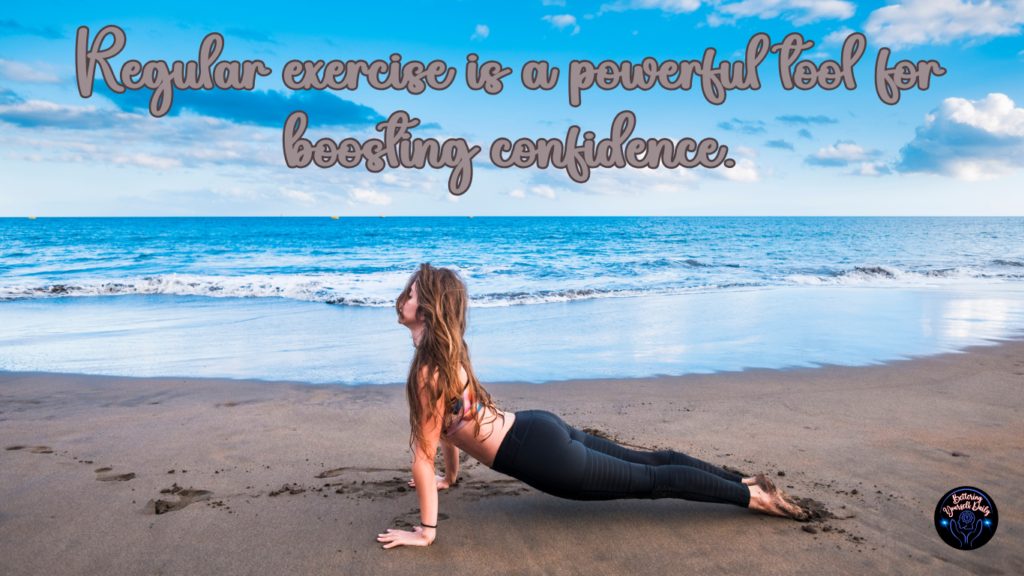
Regular exercise is a powerful tool for boosting confidence. It not only improves physical health but also enhances mental well-being by releasing endorphins, the brain’s feel-good neurotransmitters. Consistent physical activity fosters a sense of achievement as you meet fitness goals, and the positive changes in your physique can significantly elevate your self-image and confidence.
Incorporating a routine of physical activities like jogging, yoga, or team sports can help maintain this beneficial cycle. Exercise also sharpens focus and discipline, essential traits that translate into increased confidence in other areas of life. As your physical health improves, so does your ability to handle stress and challenges, reinforcing your overall confidence.
Tip 10: Surround Yourself With Supportive People
Surrounding yourself with supportive people can significantly boost your confidence. Being around those who believe in you, encourage your efforts, and offer constructive feedback can reinforce your sense of self-worth and ambition. This positive environment not only helps you feel more secure but also inspires you to take risks and pursue goals that you might otherwise shy away from due to fear of failure or judgment.
Creating a network of positivity involves actively seeking out relationships with mentors, peers, and friends who uplift and motivate you. It’s also crucial to reciprocate by offering support and encouragement to others, fostering a community of mutual respect and growth. As you engage with and contribute to this supportive network, you’ll find that your confidence builds naturally, enhanced by the strength of your connections.
Conclusion
In conclusion, building confidence is a multifaceted endeavor that requires consistent effort across various aspects of your life. From understanding your strengths and weaknesses, setting realistic goals, engaging in positive self-talk, to surrounding yourself with supportive people, each strategy plays a crucial role in enhancing your self-assurance. By implementing these techniques and maintaining a commitment to self-improvement and learning, you can develop a robust sense of confidence that empowers you to achieve your personal and professional goals.